
This is general information rather than insurance advice. Policies vary by provider and country, and you should read your policy or speak to your insurer.
Why it matters
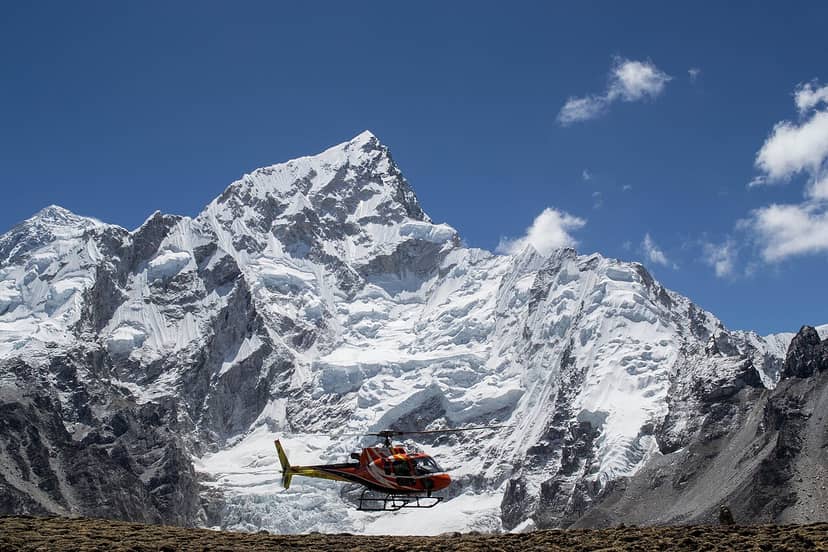
The UK government says your policy should cover treatment, repatriation and helicopter evacuation, which it says usually costs between £1,000 and £2,000 or more per flying hour. It also notes that healthcare is poor in most places outside the Kathmandu Valley and Pokhara. In a serious emergency high in the mountains, you could need both a helicopter and hospital care.
The must-have checklist
| Check | Why |
|---|---|
| Altitude limit | It must be higher than your route's highest point, including side trips and viewpoints. |
| Helicopter evacuation | Standard policies may exclude or limit it. |
| Medical treatment and hospital | Rescue-only cover won't pay your hospital bills. |
| Repatriation | Getting home after a serious illness can be very expensive. |
| Trekking as a listed activity | Some policies exclude it, or need an add-on. |
| Existing conditions | Undeclared conditions can invalidate a claim. |
| Trip delays and cancellations | Lukla and Jomsom flights are often delayed. |
Know your altitude
| Route | Highest point on our itinerary |
|---|---|
| Ghorepani Poon Hill | 3,210 m |
| Annapurna Base Camp | 4,130 m |
| Langtang Valley | About 4,773 m (Kyanjin Ri) |
| Manaslu Circuit | About 5,106 m |
| Annapurna Circuit | 5,416 m |
| Everest Base Camp | About 5,545 m (Kala Patthar) |
| Island Peak | 6,189 m, and climbing cover needed |
Travel guides commonly report that standard policies may stop at around 4,000 m, and that many Nepal trekkers look for cover up to 6,000 m. One guide warns that an emergency above your stated limit can void cover entirely. Peak climbing usually needs specialist cover, since ropes, crampons and a higher altitude are involved.
How much cover is enough?
We can't tell you an exact figure, and sources vary. One guide suggests at least US$100,000 for evacuation, and higher for high-altitude expeditions. Published estimates of an uninsured rescue range widely, from a few thousand dollars to about US$20,000, depending on what's involved. Ask your insurer what they've seen in practice.
What it may cost
One source says most trekkers pay about US$80 to US$300, depending on trip length. An operator breakdown gives US$100 to US$250 for a 30-day policy. Your age, home country, route and activity all change the price, so get real quotes. Some comparison sites note that some policies exclude Mount Everest trips, so check that too.
Is insurance legally required?
Sources conflict here. One guide says all foreign trekkers must have insurance to receive permits under a 2026 rule. Another says Nepal has no blanket national law requiring it. We couldn't confirm either against an official source. Either way, a reputable operator should ask for your insurance details, and you shouldn't trek without it.
Questions to ask your insurer
- What's the maximum altitude covered, and is that for walking only?
- Is helicopter evacuation covered, and what's the limit?
- Do I need to call you before an evacuation? What's the emergency number?
- Do I need a licensed guide for my cover to apply?
- Are medical treatment and repatriation included?
- Are my existing medical conditions covered?
- Do delays from cancelled mountain flights count?
- Do you have any exclusions for Nepal, the Everest region or restricted areas?
Get the answers in writing and save them along with your policy.
In an emergency
- Carry your policy number and 24-hour emergency number. Give copies to your guide.
- Call your insurer as soon as you can, if it's safe to do so. The UK government advises contacting your insurer quickly if you're referred to a medical facility.
- Don't delay going down if your life is at risk.
- Keep all paperwork, including medical notes and invoices.
A warning about helicopter scams
The UK government warns of isolated reports of guides taking trekkers too high too quickly in order to trigger expensive helicopter evacuations. Use a reputable company, and ask in advance how evacuations are decided and how your insurer gets involved.
Reading your policy: terms that matter
- "Up to X metres": check whether it's the height you walk to or the height you sleep at.
- "Guided" or "with a licensed guide": some cover may depend on this, so check it against the guide rules.
- "Ropes" or "mountaineering": if you're using these, standard trekking cover may not apply.
- "Medically necessary": a helicopter you choose for convenience probably won't be covered.
- "Prior approval": find out when your insurer must agree in advance, and what happens if there's no signal.
- "Against government advice": travelling against your government's advice can affect your cover.
Keep these with you
- Your policy number and the 24-hour emergency phone number
- A copy of the policy wording, saved on your phone and in print
- A note of your blood type, allergies and medicines
- A family contact back home
- A copy for your guide, in a sealed envelope if you prefer
Common questions
Can I buy a policy after I arrive in Nepal?
Some insurers allow it, but others won't. It's far better to arrange cover before you travel.
Does my credit card cover me?
Probably not at altitude, but check. Card insurance often excludes high-altitude trekking.
Is rescue-only cover enough?
Be careful. One source notes that rescue-only subscriptions cover the flight but not the medical treatment after you arrive in Kathmandu.
Next steps
Read about altitude sickness and the real risks of Everest Base Camp, or ask us what your route requires.


Comments