
Mountaineering is dangerous. This is general planning information and not climbing instruction. Your guide will make the decisions on the mountain.
Side by side
| Island Peak (Imja Tse) | Mera Peak | |
|---|---|---|
| Height | 6,189 m | Usually given as about 6,476 m |
| Our itinerary | 17 days | 18 days |
| Main challenge | Technical sections, plus altitude | Greater altitude and a long summit day |
| Summit terrain | Glacier, fixed ropes, steep headwall and narrow ridge | Mostly long snow slopes on a glacier, steeper near the top |
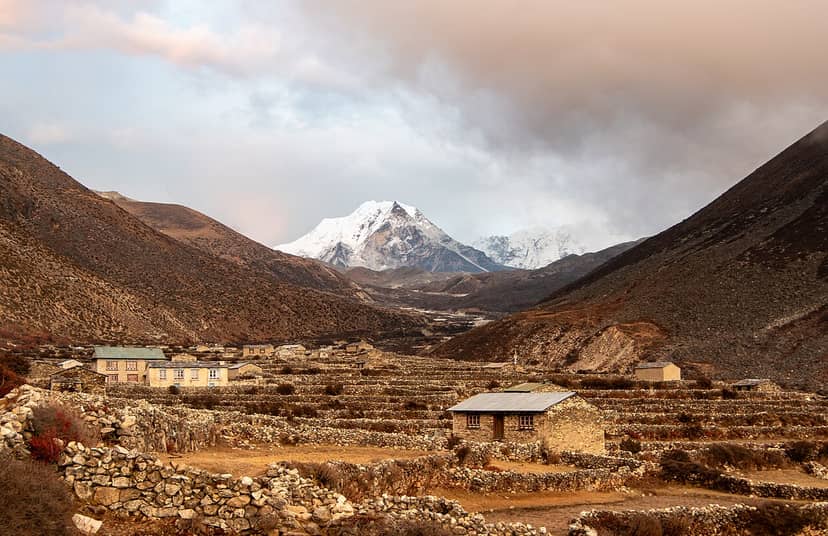
| Approach | Busy Everest trail via Dingboche and Chhukhung | Quieter Hinku valley |
| Facilities | More lodges on the approach | Simpler in places |
| High camp | Many climbers leave from base camp | High camp usually around 5,780 m |
Some sources give Mera as 6,461 m or 6,470 m. One guide grades Mera as PD and Island Peak as PD+ to AD-, although we couldn't confirm the source of that grading.
What Island Peak is like
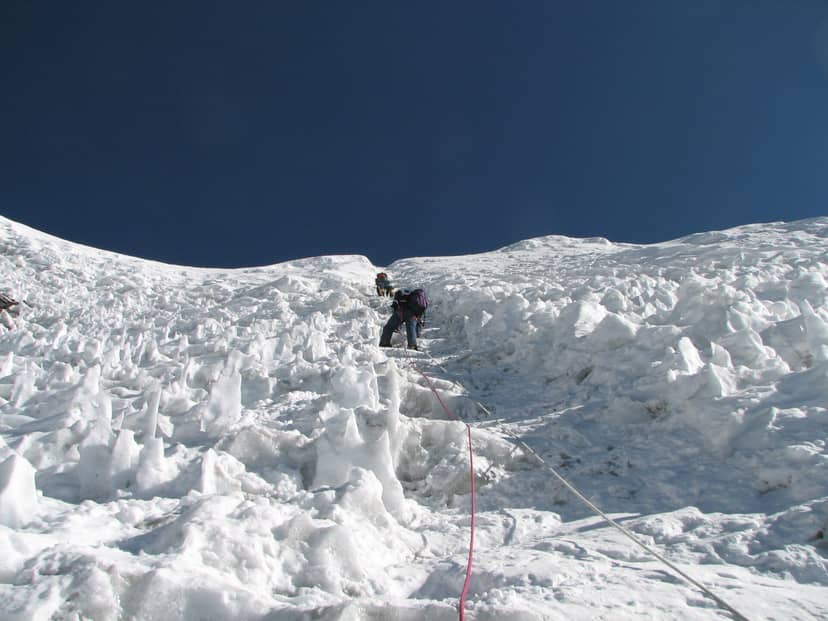
You usually acclimatize on the Everest Base Camp trail, then move to Chhukhung and base camp. Summit day often starts after midnight. You cross a glacier, sometimes with crevasses, then climb a steep snow and ice headwall on fixed ropes to reach a narrow ridge and the summit.
You'll need to use crampons, an ice axe, a harness and an ascender, and you should be happy on exposed ground. Many operators run training at base camp, but prior practice is a real advantage.
What Mera Peak is like
You walk through remote forest and the Hinku valley to Khare, cross the Mera La onto the glacier, and move up to high camp. Summit day is long and cold, with slow, steady walking at very high altitude. It's often described as a trekker's climb, but that can be misleading. A short steeper section may need rope work, crevasses are possible, and at this height, every step is hard.
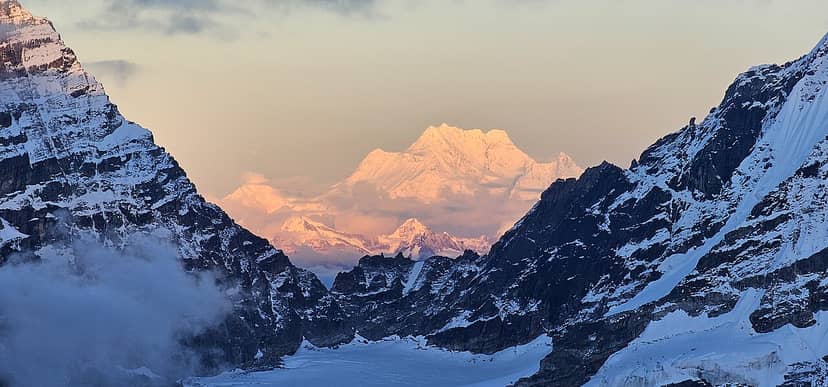
On a clear day, the summit view reaches Everest, Lhotse, Makalu, Cho Oyu and Kanchenjunga.
How the summit days compare
| Island Peak | Mera Peak | |
|---|---|---|
| Night before the summit, on our plans | Base camp, about 5,087 m | High camp, about 5,780 m |
| Height to climb on the day | About 1,100 m | About 700 m |
| Our estimated day | About 12 hours, back to Chhukhung | About 10 hours, back to Khare |
| Acclimatization before the summit | Includes Everest Base Camp and Kala Patthar | Includes a rest and training day at Khare |
Other operators quote different times. For Mera, sources range from about 8 to 12 hours, with starts as early as 2 am. The table also shows why height alone doesn't tell the whole story. Mera has less climbing on summit day, but you sleep much higher the night before, which many people find hard. Island Peak has more height to gain and harder ground, but you've slept lower.
Our Mera plan also has a spare day for weather. Ask any operator whether their plan has one, because a single storm can end a summit attempt if there's no time left to wait.
Which should you choose?
| If you… | Consider |
|---|---|
| Want to learn and use technical skills | Island Peak |
| Are nervous about exposure and ladders or ropes | Mera Peak |
| Have done well at high altitude before | Mera Peak is a natural goal |
| Want to see Everest Base Camp as well | Island Peak |
| Prefer quieter trails | Mera Peak |
| Have little or no winter experience | Get training first, whichever you choose |
Success rates
We don't have reliable figures. One website gives about 50 to 70% for Island Peak, but it doesn't clearly source this, and we found no comparable number for Mera. Treat any summit rate carefully. Weather, the time you allow, and how you acclimatize all matter far more than a marketing number.
Permits
Climbing permits are arranged through your agency. Sources conflict on the fees. Older pages list US$250 in spring and US$125 in autumn for these peaks, while one 2025 source lists higher rates, such as US$500 in spring and US$250 in autumn. Ask your agency for the current fee from the Nepal Mountaineering Association.
You'll also need local permits. Island Peak uses Sagarmatha National Park and the Khumbu municipality fee, and Mera is reported to use Makalu Barun National Park plus local charges. See our permit guide.
When to go
Both are usually climbed in spring (March to May) and autumn (September to November). Winter brings severe cold, and summer monsoon brings poor weather.
How to prepare
- Build endurance with long, loaded hill days.
- Take a basic mountaineering course, covering crampons, ropes and ice axe use.
- Gain altitude experience on a high trek first, if you can.
- Make sure your insurance covers climbing at this height. Standard trekking cover often doesn't. See our insurance guide.
- See a doctor who understands altitude. Read our altitude sickness guide.
- Choose a plan with spare days for weather.
Common questions
Can a beginner climb these peaks?
Fit people with little climbing experience do attempt them with guides, but it's a big step. Learning the skills first makes it much safer and more enjoyable.
Can you climb both in one trip?
Some operators offer combined trips, which give good acclimatization but take much longer. They're best for experienced, very fit people.
What about Lobuche East?
Lobuche East is more technical than either, so it's better suited to people with some alpine experience.
Next steps
Compare the Island Peak and Mera Peak itineraries, or tell us about your experience and we'll advise you.


Comments