
Quick facts
| Region | Annapurna Conservation Area |
| Our itinerary | 9 days, with 4 trekking days |
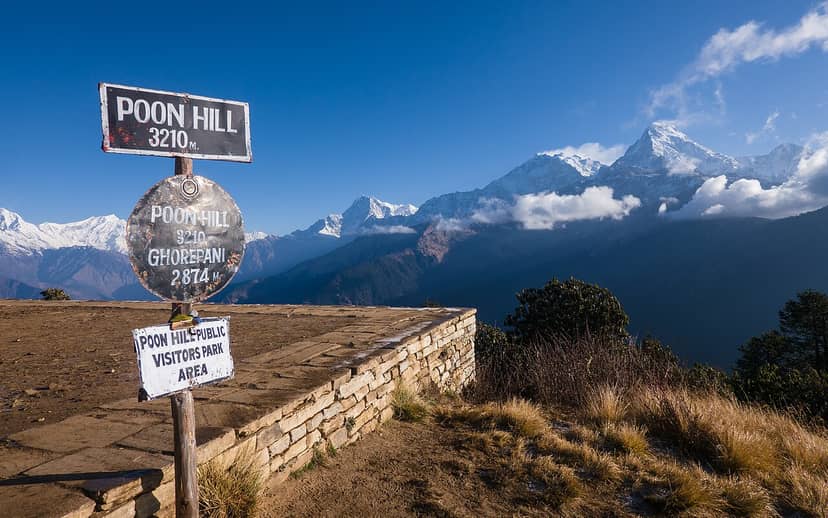
| Highest point | Poon Hill, 3,210 m |
| Our rating | Easy |
| Best seasons | Spring, autumn and clear winter days |
| Permit | Annapurna Conservation Area Permit |
The route, day by day
| Trek day | Route | Sleep at | Walking |
|---|---|---|---|
| 1 | Drive to Nayapul, walk to Ulleri | 1,960 m | About 4 hours |
| 2 | Ulleri to Ghorepani | 2,860 m | About 5 hours |
| 3 | Poon Hill sunrise, then Tadapani | 2,630 m | About 6 hours |
| 4 | Tadapani to Ghandruk | 1,940 m | About 4 hours |
From there, you drive back to Pokhara. Our full plan includes arrival and return days from Kathmandu, too. Road access has changed some start points, so your operator may drive further than Nayapul to cut some of the walk.
The Ulleri stairs
Every guide to this trek mentions them, for good reason. The climb to Ulleri involves thousands of stone steps, and it's often the toughest part of the trip. Go slowly, take breaks, and don't worry about how fast anyone else is going. The walk the next day is gentler, through mossy oak and rhododendron forest.
The sunrise walk
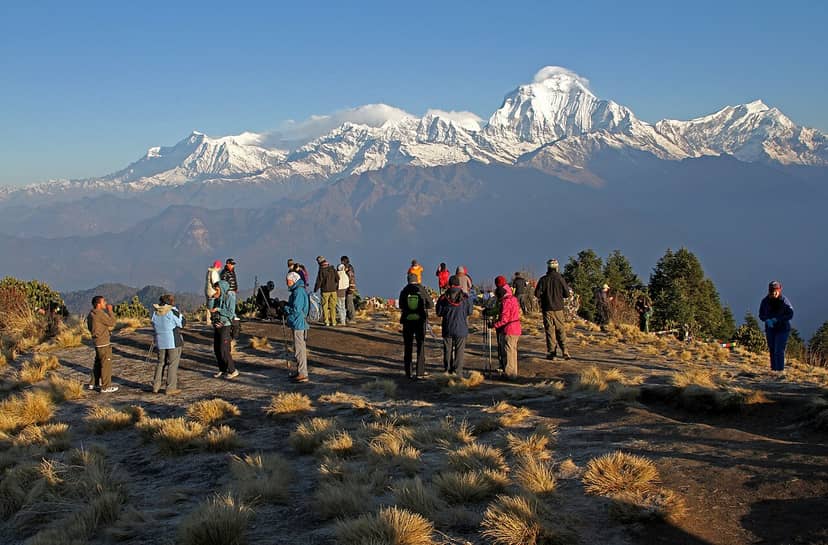
From Ghorepani, it's about a 45-minute to one-hour climb to the viewpoint, depending on your pace. Most people leave around 4 to 5 am, with a headtorch and warm clothes. On a clear morning, you'll see Dhaulagiri, Annapurna South and Machhapuchhre light up. Then you go back to the village for breakfast.
It's busy in peak season, and you won't be alone up there. If you'd like a quieter view, consider Mohare Danda. We couldn't find a reliable current figure for the small viewpoint charge, so ask your guide.
How hard is it?
It's rated easy for a Himalayan trek, but you'll still walk for several hours on steep stairs each day. There's no technical terrain, and altitude is lower than on most big treks. Even so, some people feel the height at about 3,000 m, so tell your guide if you get a headache or feel dizzy. Our easiest treks guide compares other options.
When to go
- Spring: rhododendrons turn the forest red and pink, usually from about March.
- Autumn: often the clearest mountain views, and also the busiest.
- Winter: quiet and often clear, but cold, and there can be snow around Ghorepani.
- Monsoon: rain, leeches and hidden mountains make it a poor choice.
Lodges and food
There are plenty of teahouses, which is part of why this suits first-timers. Rooms are simple, and the dining room stove is where everyone gathers. Ghorepani and Ghandruk have the most choice. Hot showers and charging may cost extra.
Permits and guides
You'll need an Annapurna Conservation Area Permit, widely reported at NPR 3,000 for foreign visitors. Reports differ on whether a TIMS card is needed. See our permit guide and guide rules.
Tips for a better trek
- Start the stairs early. It's cooler, and you can take your time on the climb to Ulleri.
- Set out your things the night before. You'll be getting up around 4 am, so have your headtorch, gloves, hat and camera ready.
- Dress in layers for the viewpoint. You'll warm up on the climb, then get cold quickly while you wait for sunrise.
- Keep your phone warm. Batteries drain quickly in the cold, so carry yours in an inside pocket.
- Don't rush away from the top. The colours keep changing after the first light, and the crowds soon thin out.
- Be kind to your knees. The walk down from Ghorepani also has plenty of steps, so use your poles.
Ghandruk, our final night, is a good place to slow down. It's a large Gurung village with stone houses and views towards Annapurna South and Machhapuchhre when the weather is clear. Staying here also makes the trek feel like more than a single sunrise.
What to pack
- Comfortable, well-worn boots
- Trekking poles, which are a big help on the stairs
- Warm layers for the sunrise climb
- A headtorch
- A rain jacket
- Water purification tablets or a filter
- Rupees in cash, because cards and cash machines may not be available on the trail
Add-ons
| Add | Why |
|---|---|
| Khopra Ridge | A quieter, higher continuation, with community lodges |
| Annapurna Base Camp | A bigger trek that can be linked with Poon Hill |
| Pokhara Lakeside | Relax by Phewa Lake after your trek |
Common questions
Can children do this trek?
Many families do, particularly with shorter days and a slower plan. Get medical advice about taking children to altitude.
Can I do it in fewer days?
Short 2-day and 3-day trips are advertised, usually with more driving. They work if you're fit, but you'll feel more rushed and spend more time in vehicles.
Will I definitely see the mountains?
No one can promise that. Clouds and haze happen, particularly in late spring. Staying an extra night gives you a second chance.
Do I need a sleeping bag?
It's useful, particularly in winter. Lodges usually provide blankets, but a light bag adds warmth and comfort.
Next steps
See the Ghorepani Poon Hill Trek page, read our beginner's guide, or ask about dates.


Comments