
Quick facts
| Region | Annapurna Conservation Area |
| Our itinerary | 8 days, with 4 trekking days |
| Highest point | Upper viewpoint about 4,200 m, base camp about 4,500 m |
| Our rating | Moderate |
| Best seasons | Spring and autumn |
| Permit | Annapurna Conservation Area Permit |
Published altitudes vary, especially for High Camp, which is listed anywhere from about 3,550 m to about 3,700 m. Treat figures as approximate.
The route
Pokhara to Forest Camp
A short drive takes you to Kande, then you walk via Australian Camp and Pothana into thick oak and rhododendron forest. Forest Camp is at about 2,500 m.
Forest Camp to High Camp
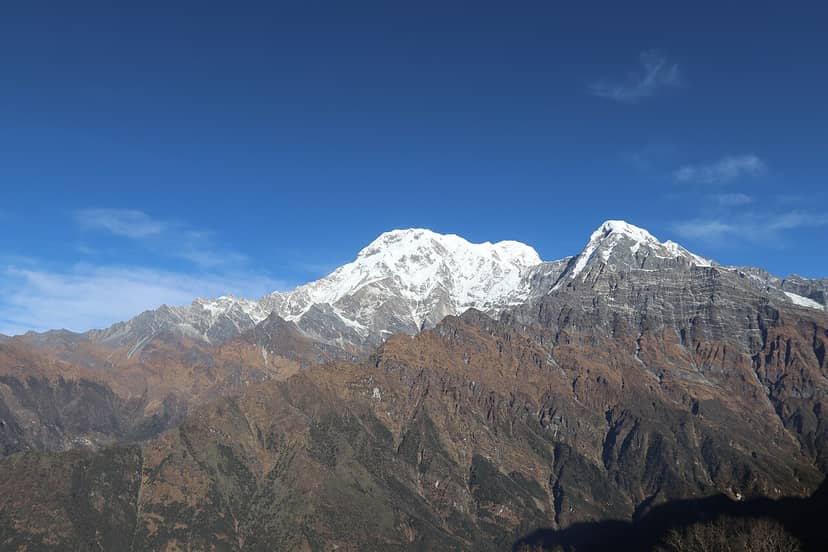
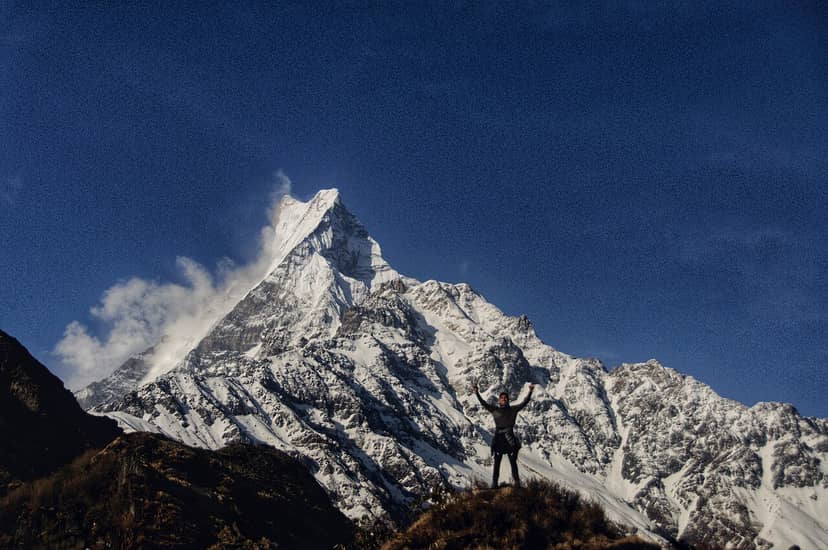
This is the best part of the trek for many people. You go through Low Camp and climb above the trees onto a narrow ridge. Machhapuchhre looks very close, and on a clear evening, the sunset is unforgettable.
High Camp to the viewpoints
Set off before dawn for the upper viewpoint, at about 4,200 m. Fit trekkers in good conditions may continue to base camp, at about 4,500 m. This trail is exposed, so turn around if the weather changes or if you feel unwell. You then return to High Camp and descend to Low Camp.
Low Camp to Pokhara
Walk down through farmland and villages to Siding, then drive back to Pokhara.
How many days do you need?
Sources offer anything from 4 to 7 walking days. One guide warns that a 3-day version is too tight, because you gain a lot of height from Pokhara in very little time. We'd rather you take an extra day. If you've got time, spending two nights near High Camp makes for a far better chance of seeing clear views.
How hard is it?
It's moderate, and fit beginners can do it, but it's not a stroll. The trail climbs steeply, and walking days often last 5 to 7 hours. The upper section is exposed to wind and can be icy. Altitude matters too, since you go from about 820 m in Pokhara to over 4,000 m within a few days. Read our altitude sickness guide.
What the days look like on our plan
| Trek day | Route | Sleep at | Walking |
|---|---|---|---|
| 1 | Drive to Kande, walk to Forest Camp | About 2,550 m | About 6 hours |
| 2 | Forest Camp to High Camp | About 3,550 m | About 6 hours |
| 3 | Viewpoint, then back down to Low Camp | About 3,050 m | About 8 hours |
| 4 | Walk to Siding, drive to Pokhara | 820 m | About 5 hours |
The third day is the big one, so eat well the night before, and pack your warm layers and headtorch before you sleep. Your guide will choose the turnaround point on the day, based on the weather, the trail conditions and how everyone in the group feels. If you're slow or feeling the altitude, the best choice may be to stop lower down. It's a good day even if you don't reach the end of the trail.
Your knees will also notice the descent to Siding, which is steep in places. This is a good time to use your trekking poles.
Lodges and food
Teahouses are simple and family-run. Lodges at High Camp are few, and they fill up quickly in peak season, so it's a good idea to have your guide plan ahead. Expect basic rooms, shared toilets and a warm dining room. Prices rise with altitude, and hot showers or charging may cost extra.
Permits and guides
You'll need an Annapurna Conservation Area Permit, widely reported at NPR 3,000 for foreign visitors. Reports differ on whether TIMS is also needed. See our permit guide.
Some local guides still describe a guide as optional here, but the 2023 rule and UK government advice point the other way, and the UK government says not to trek alone. Read our guide to the rules. Given the exposed upper trail, we recommend one.
When to go
| Season | Conditions |
|---|---|
| Autumn | Often the clearest views, and the busiest lodges |
| Spring | Rhododendrons in the forest, with some haze later on |
| Winter | Quiet and often clear, but cold, with snow and ice higher up |
| Monsoon | Heavy rain, slippery paths and leeches in the forest |
See our season guide for more.
What to pack
- Warm layers, a hat and gloves, because the ridge can be cold and windy
- A warm sleeping bag, particularly outside peak season
- Trekking poles for steep descents
- A headtorch for the early morning start
- Microspikes if there's snow or ice, which your guide can advise on
- Sun protection and water purification
- Rupees in cash from Pokhara
How it compares
| Trek | Choose it if you want |
|---|---|
| Ghorepani Poon Hill | An easier route, lower altitude and more lodges |
| Annapurna Base Camp | A longer trek, with a famous high amphitheatre at the end |
| Khopra Ridge | A quieter route and community lodges |
Common questions
Can you see Machhapuchhre's summit?
Yes, on clear days. The mountain itself is off limits to climbers, so you can enjoy it from this ridge.
Is it good for beginners?
Yes, if you're fit and go slowly, although Poon Hill is an easier first trek. See our easiest treks guide.
Do I have to go to base camp?
No. Many people stop at the upper viewpoint, which already gives you a superb view.
Next steps
See our Mardi Himal Trek page, read about things to do in Pokhara, or ask us about dates.


Comments