
The itinerary at a glance
| Day | Route | Sleep at | Walking |
|---|---|---|---|
| 1 | Arrive in Kathmandu | 1,400 m | None |
| 2 | Travel to Pokhara | 820 m | None |
| 3 | Drive to Ghandruk, trek to Chhomrong | 2,170 m | About 5 hours |
| 4 | Trek to Bamboo | 2,310 m | About 5 hours |
| 5 | Trek to Deurali | 3,230 m | About 5 hours |
| 6 | Trek to Annapurna Base Camp | 4,130 m | About 5 hours |
| 7 | Sunrise, then descend to Bamboo | 2,310 m | About 7 hours |
| 8 | Trek to Jhinu | 1,780 m | About 6 hours |
| 9 | Drive back to Pokhara | 820 m | None |
| 10 | Return to Kathmandu | 1,400 m | None |
| 11 | Departure | None | None |
Walking times are estimates and depend on your pace and the conditions. Your guide may change overnight stops if lodges are full, especially in peak season.
The route, day by day
Days 1 and 2: Kathmandu and Pokhara
Arrive, check your gear, and finish any permit paperwork. Then take a tourist bus or short flight to Pokhara and spend the evening by Phewa Lake. If you've got time, read about things to do in Pokhara.
Day 3: Into Gurung country
Drive to the road head near Ghandruk, a Gurung village with stone houses and views of Annapurna South. Walk through terraced farmland to Chhomrong, the gateway to the Sanctuary.
Day 4: Stairs and forest
Descend Chhomrong's long stone steps, cross the river, and climb through forest towards Sinuwa and Bamboo. Expect plenty of stairs on this route, going both up and down.
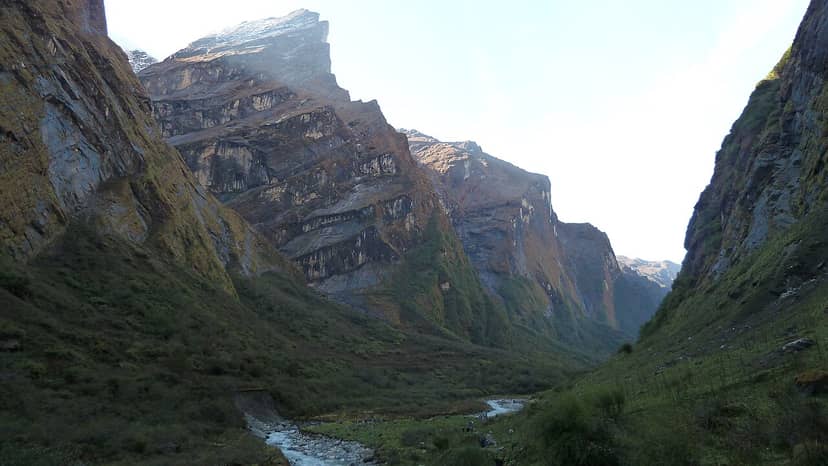
Day 5: Up the gorge
The valley narrows past Dovan and Himalaya, with bamboo and rhododendron giving way to rock. This upper section is the part most exposed to avalanches after heavy snow, so your guide will watch conditions closely.
Day 6: Into the Sanctuary
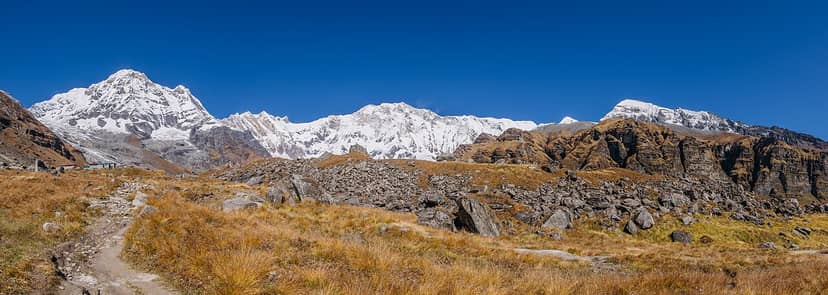
Climb past Machhapuchhre Base Camp, about 3,700 m, into the Annapurna Sanctuary, and reach Annapurna Base Camp at 4,130 m. Walk slowly, because you're gaining height quickly. This is a good day to pay attention to any headache or other symptoms.
Day 7: Sunrise and down
Watch the first light on Annapurna I and the surrounding peaks. Then begin the long descent to Bamboo, which is much easier on your lungs but harder on your knees.
Day 8: Hot springs
Climb back up to Chhomrong and go down to Jhinu, where natural hot springs near the river are a popular reward.
Days 9 to 11: Back to the city
Drive to Pokhara for a hot shower and a good dinner. Then return to Kathmandu ahead of your flight.
How to change it
| Option | What changes |
|---|---|
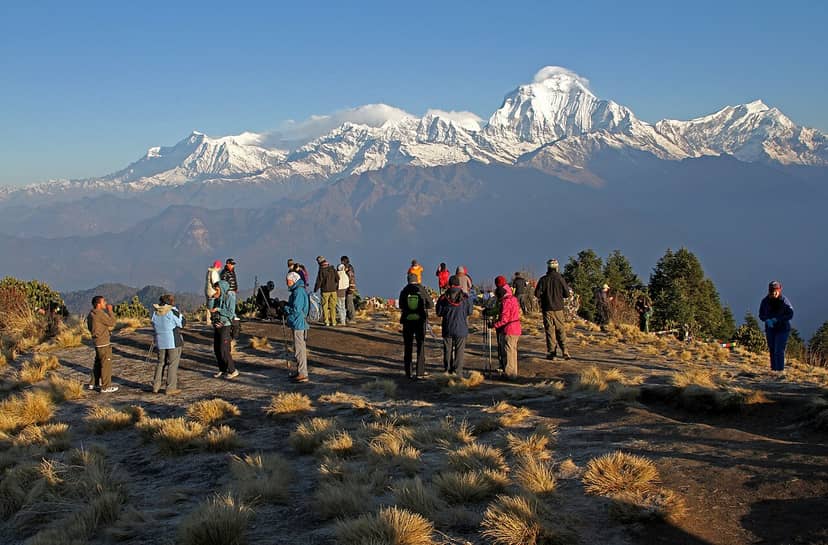
| Add Poon Hill | Add about 2 to 3 days via Ghorepani for the famous sunrise |
| Slower ascent | Add a night at Sinuwa or Deurali, which is useful if you're worried about altitude |
| Shorter version | Drive further on local roads, though you'll have less time to adjust |
| Spare days | Add one at the end for transport delays |
Be careful with very short versions. Going from Pokhara at about 820 m to over 4,000 m in only a few days leaves little time to adapt. The US Centers for Disease Control and Prevention says that above about 3,000 m, sleeping altitude should rise by no more than about 500 m per day. Our itinerary exceeds that between Deurali and base camp, as do many others, so take this day slowly.
What you need to know
- Difficulty: we rate it challenging, mainly because of the many stone steps and the climb to over 4,000 m.
- Best seasons: spring and autumn. See our season guide.
- Permits: you need an Annapurna Conservation Area permit. Read our permit guide for details on TIMS.
- Lodges: simple teahouses, and upper lodges fill quickly in peak season.
- Cost: see our cost guide.
What to expect in the villages
You begin among Gurung farming villages, where stone houses and terraced fields line the slopes. Ghandruk and Chhomrong have more facilities than the upper valley. Beyond Chhomrong, the settlements are mainly small clusters of lodges, built for trekkers. There's no regular village life above that point, and supplies are carried up, so food and hot water cost more.
Altitude on this route
The biggest height gain comes in the last two days up. On our plan, you go from 2,310 m at Bamboo to 3,230 m at Deurali, and then to 4,130 m at base camp. If you've had altitude trouble before, or just want a gentler ascent, ask for a night at Machhapuchhre Base Camp or an extra stop lower down. Remember that if you develop symptoms, you shouldn't sleep any higher. Read our altitude sickness guide.
What to pack for this route
- Trekking poles, which help a lot on the stone stairs
- Warm layers and a warm sleeping bag, because base camp is cold at night
- A rain shell, as weather in the gorge can change quickly
- Sunscreen and sunglasses, especially near snow at base camp
- Water purification tablets or a filter
- Rupees in cash, because cards and cash machines may not be available
What can change the plan
- Snow in the upper gorge: avalanche risk can close the path, so your guide may wait or turn back.
- Full lodges: in peak season, you may stop at a different village.
- Road conditions: rain can affect jeep tracks below the trail.
- Your health: a slower plan is always a valid plan.
Common questions
Can a beginner do this?
Yes, if you've trained for long days with stairs and you take it slowly. If it's your first trek, read our beginner's guide.
Do you need a guide?
Recent sources say international trekkers on this route need a licensed guide. See our guide to the rules.
Is there mobile coverage?
Coverage varies and can be limited, as the UK government warns for remote areas. Some lodges offer paid Wi-Fi, but don't rely on it.
Next steps
See the full Annapurna Base Camp Trek page, or ask us to adjust the itinerary to fit your dates.


Comments