
The figures below are market ranges reported by operators and travel guides in 2026, not Journey Vibes prices. Costs change often, so treat them as a planning guide. For our current trip details, see the Everest Base Camp Trek page.
Typical package prices
| Trip style | Reported range per person |
|---|---|
| Self-arranged, budget | US$950 to US$1,200 |
| Standard guided trek | US$1,250 to US$1,800 |
| Private guided trek | US$1,800 to US$3,000 |
| Luxury or helicopter-assisted | US$3,000 to US$5,000 or more |
These ranges come from one Nepal operator's published breakdown. Wikivoyage reports full-service packages of about US$1,255 to US$2,500 in 2026, which broadly agrees. A very low price usually means something has been left out, so always compare what's included rather than the headline figure.
Flights to Lukla
This is often the largest single cost after the guide. One published 2026 breakdown lists about US$238 each way between Kathmandu and Lukla, and about US$188 each way from Ramechhap. As of 2024, most Lukla flights in busy seasons were reported to leave from Manthali Airport at Ramechhap, which means a road transfer of several hours from Kathmandu, often very early in the morning.
Ask whether your package includes the Ramechhap transfer. Also check the baggage allowance, because excess weight is charged by the kilo.
Permits
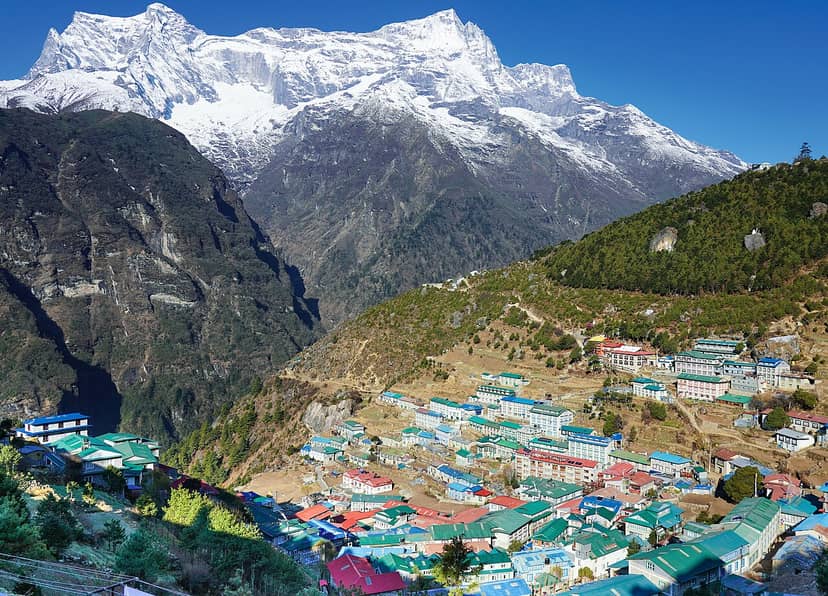
Most international trekkers need two local charges in the Everest region:
- Sagarmatha National Park entry: widely reported as NPR 3,000 for foreign visitors. Some sources add 13% VAT, giving NPR 3,390.
- Khumbu Pasang Lhamu Rural Municipality fee: reported at NPR 2,000 to NPR 3,000, with NPR 3,000 the more common recent figure.
Sources disagree slightly, so confirm the amount when you book. Taking the Jiri route adds a Gaurishankar Conservation Area permit. Our Nepal trekking permit guide covers this in more detail.
Guide and porter
One 2026 breakdown lists US$25 to US$35 per day for a licensed guide and US$20 to US$25 per day for a porter. Packages normally include these wages. Check that your operator pays staff fairly and provides insurance and proper equipment for them.
Tips are customary and usually separate. The same source suggests US$8 to US$15 per day for a guide and US$5 to US$10 per day for a porter. Agree how tipping works before you set off.
Teahouses and food
Rooms are simple and get more expensive as you climb. Reported twin-share rates range from about US$7 to US$12 in lower villages, up to US$20 to US$25 at Lobuche and Gorak Shep. Independent trekkers are advised to allow about US$25 to US$50 per day for food and drinks.
Everything above Namche is carried up by porter or yak, so a plate of food or a litre of hot water costs more the higher you go.
The extras people forget
- Nepal visa: reported at US$50 for 30 days. Check the Department of Immigration before you travel.
- Travel insurance: it must cover trekking at this altitude and helicopter evacuation. The UK government specifically tells travellers to check for mountain rescue and helicopter cover. One operator estimates US$100 to US$250 for a 30-day policy.
- Charging, Wi-Fi and hot showers: paid by the hour or by the session, and prices rise with altitude.
- Safe drinking water: bottled water is expensive and creates waste, so many trekkers carry purification tablets or a filter.
- Cash: the UK government warns that cash machines and card payments may not be available in remote areas. Carry enough rupees for several extra days.
- Spare days: Lukla flights are often delayed by weather. Extra nights in Kathmandu cost money, but missing an international flight costs more.
- Gear: many items can be rented or bought cheaply in Kathmandu. Your boots should be your own and well worn in.
A sample budget
Here's a simple way to estimate your total for a guided trek, using the ranges above:
| Item | Rough range (US$) |
|---|---|
| Guided package, including Lukla flights and permits | 1,250 to 1,800 |
| Visa | 50 |
| Travel insurance | 100 to 250 |
| Tips for guide and porter | 100 to 180 |
| Personal spending on the trail | 200 to 300 |
| Total, before international flights and gear | 1,700 to 2,580 |
This assumes flights and permits are inside your package, so check that they are. It also leaves out optional comforts such as a private room or a helicopter return.
How to compare two quotes
- Are Lukla flights and airport or Ramechhap transfers included?
- Are all permits and local fees included?
- Does the itinerary include at least two acclimatization days?
- What's the group size, and how many guides and porters are there?
- Which meals are included, and is hot water or tea part of them?
- What happens if flights are cancelled, or if you have to descend early?
A cheaper trip that cuts acclimatization days isn't a real saving. Going up too quickly is a safety risk, and the UK government also warns of cases where inexperienced trekkers were taken too high too fast and then sent on expensive helicopter evacuations.
Why two quotes can differ by hundreds of dollars
- Group size: one operator's published price drops from about US$1,595 for one person to about US$1,350 per person for a group of 11 to 15.
- Trip length: extra acclimatization or spare days add meals, rooms and staff wages. One breakdown estimates US$20 to US$50 per extra day on the trail, plus the guide and porter's daily costs.
- Where flights start: Kathmandu flights can avoid the long Ramechhap road transfer, but availability depends on the season.
- Lodge standard: most trekkers stay in simple teahouses. Luxury lodges exist on parts of the route, at very different prices.
- What's included: two prices are only comparable if they include the same flights, permits, meals, staff and hotel nights.

What about a helicopter?
Some trekkers walk in and fly out by helicopter. One operator lists a shared seat between Kathmandu and Lukla at about US$400 to US$500, and a private charter at about US$2,500 to US$3,000 per flight, for up to five passengers. Prices change with demand and the route, so ask for a written quote. Read the insurance small print too, because a helicopter you've chosen for comfort isn't the same as an insured medical evacuation.
The same source estimates an uninsured emergency helicopter evacuation at about US$4,000 to US$6,000, which is one more reason to get proper cover before you go.
Common questions
Can I pay for things on the trail by card?
Don't rely on it. The UK government warns that cards may not be accepted and that cash machines may be unavailable in remote areas. Bring enough Nepali rupees from Kathmandu.
Is a cheaper trek in the off-season a good idea?
It can be quieter, but weather brings its own costs. Winter snow can close high lodges and paths, and the monsoon can delay flights for days. See our season guide before choosing dates based on price alone.
Should I book directly with a local company?
That's often good value, and it can support local jobs. Whoever you choose, ask whether the agency is registered, and check reviews, insurance and how staff are treated.
Next steps
See the full day-by-day plan for the Everest Base Camp Trek, compare it with the shorter Everest Panorama Trek, or ask us about current prices and dates.


Comments