
Quick facts
| Established | 1973, Nepal's first national park (as Royal Chitwan National Park) |
| UNESCO World Heritage Site | Since 1984 |
| Area | About 953 km² |
| Main gateway | Sauraha |
| Reported entry fee | NPR 2,000 per day for foreign visitors, NPR 1,000 for SAARC nationals |
| Our trip | Chitwan Jungle Safari, 3 days |
What you might see
Greater one-horned rhinoceros
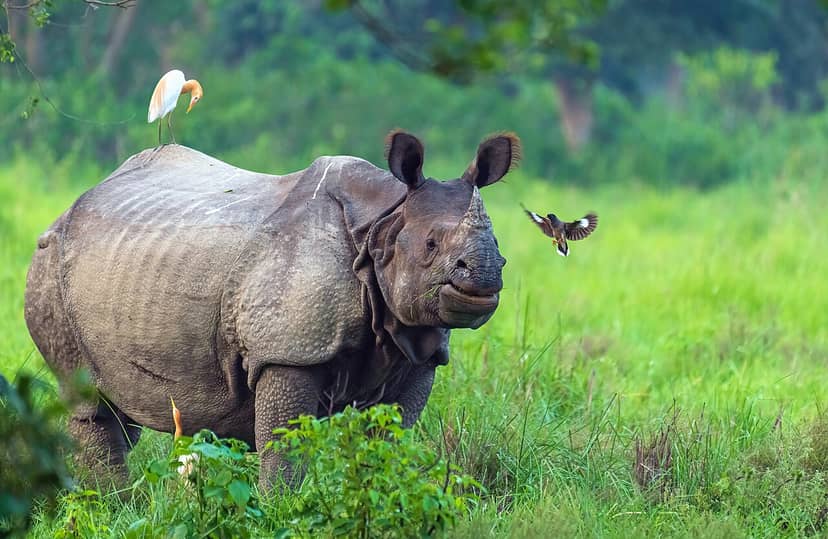
Rhinos are the star of Chitwan. Numbers fell to about 95 by the late 1960s, and conservation has helped them recover. In 2015, Chitwan held 605 of Nepal's 645 rhinos, according to the census figures cited by Wikipedia. Seeing one is common but never guaranteed.
Bengal tiger
Tigers live here too, with one recent estimate of about 145 in and around the park, but they're shy, and most visitors don't see one. Treat a sighting as a rare bonus.
Birds and other wildlife
A 2006 checklist recorded 543 bird species, so it's a great place for birdwatchers. You may also see deer, monkeys and crocodiles on the rivers.
Things to do
Jeep safari
This is the most popular way to go deep into the park. Morning and late afternoon drives are generally best for wildlife. A jeep must also pay an entry fee, reported at NPR 5,000. One travel guide lists shared full-day safaris at about US$35 to US$55 per person, but it's a commercial source, so check current prices.
Canoe trip
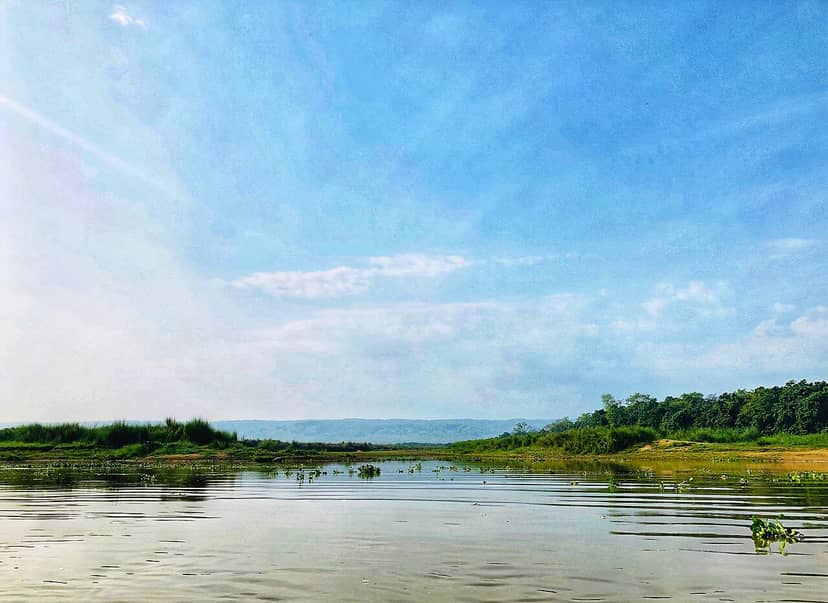
A dugout canoe trip on the Rapti River is a quiet way to look for birds and crocodiles. It's often combined with a short walk back through the forest.
Guided walk
Walking with a naturalist gets you close to the forest's sights, sounds and tracks. It's exciting, but rhinos and other animals can be dangerous. Only go with experienced guides, and follow their instructions exactly.
Tharu culture
Visit a local village, or see an evening cultural show in Sauraha, to learn about the Tharu people who have long lived in this region.
A note on elephants
Elephant-back rides have been offered here, and one report mentions a ride fee, but many travellers and animal welfare groups object to them. Our safari doesn't include elephant-back rides. We'd suggest choosing jeep, canoe or walking trips.
When to go
| Season | What to expect |
|---|---|
| October to March | Generally the most comfortable, with cool mornings in winter. Sources mostly favour this window |
| April and May | Hot, but still before the monsoon |
| June to September | Monsoon rain, and parts of the park may be closed, so check first |
How to get there
Most people go to Sauraha. One operator lists about 5 hours by tourist bus from Kathmandu, though times vary, and Pokhara is also linked by road. Short flights run to nearby Bharatpur. The UK government warns that road accidents are a major risk, so choose a reputable vehicle, and avoid night travel.
A sample two-night stay
| Day | Plan |
|---|---|
| Day 1 | Arrive in Sauraha, settle in, then walk to the Rapti River for sunset. If you're not too tired, see an evening cultural show. |
| Day 2 | Take a morning canoe trip and walk with a naturalist, then a jeep safari. Rest during the heat of midday if you can. |
| Day 3 | Take an early birdwatching walk if there's time, then travel on to Kathmandu or Pokhara. |
This is only an example, because timing depends on the season, your lodge and park rules. Our trip includes a lodge stay, the meals shown on the itinerary, a licensed naturalist, the park fee, a jeep safari and a canoe trip. Travel to and from Chitwan isn't included, so plan for that separately. See the trip page for details.
Flights from Kathmandu land at Bharatpur, around 20 km from Sauraha. Buddha Air lists the flight at about 20 to 25 minutes. Sources also warn that buses don't leave from the airport itself, so a taxi or transfer is usually easier with luggage. It's worth confirming this with your lodge.
How long to stay
- One night: rushed, with time for only one main activity.
- Two nights: enough for most visitors. This is what our trip offers.
- Three nights or more: better if you love wildlife or birdwatching, because you get more chances for sightings.
What to bring
- Neutral-coloured clothes, with long sleeves and trousers
- Insect repellent
- A warm layer for early morning jeep drives in winter
- Binoculars and a camera with a zoom lens
- A hat, sunscreen and water
- Comfortable closed shoes for walking
Staying safe and being respectful
- Stay with your guide inside the park, and keep your voice down.
- Never get close to wildlife for a photograph.
- Don't feed animals, and leave no litter.
- Ask your doctor about malaria and other health advice for the lowlands.
Chitwan or Bardia?
Bardia National Park, in the far west, is quieter and feels wilder, but it's harder to reach. If it's your first safari in Nepal and you have limited time, Chitwan makes more sense.
Common questions
Will I see a tiger?
Probably not. Rhinos are far more likely. A good guide will help, but wildlife can't be scheduled.
Is Chitwan family-friendly?
Yes, jeep safaris and canoe trips usually work for families. Ask your operator about age limits for each activity, and about walks in particular.
Can I combine it with a trek?
Yes, and it's a popular way to end one. See our 10-day Nepal itinerary.
Next steps
See our Chitwan Jungle Safari, or ask us about dates and lodge options.


Comments